
Project · Piloting
Digital recognition of prior learning – from experience to new educational opportunities
Synchrocity is developing a digital solution to help make competence gained through work and life experience visible and assessable. The MIRA framework is at its core. Led by Fagskolen i Nord, the project has now reached the piloting phase, with healthcare as the first area of testing.
The competence is there – it needs to become visible
Many adults have valuable competence gained through work, education and other experiences that is not fully reflected in formal qualifications. Recognition of prior learning can open pathways to further education by acknowledging what a person already knows and can do.
Troms faces significant competence and recruitment needs, particularly in health and care. The project aims to mobilise existing competence and make higher vocational education more accessible.
The ambition is a clearer, more traceable and consistent assessment process for applicants and vocational colleges alike.
Synchrocity develops the solution – MIRA is at its core
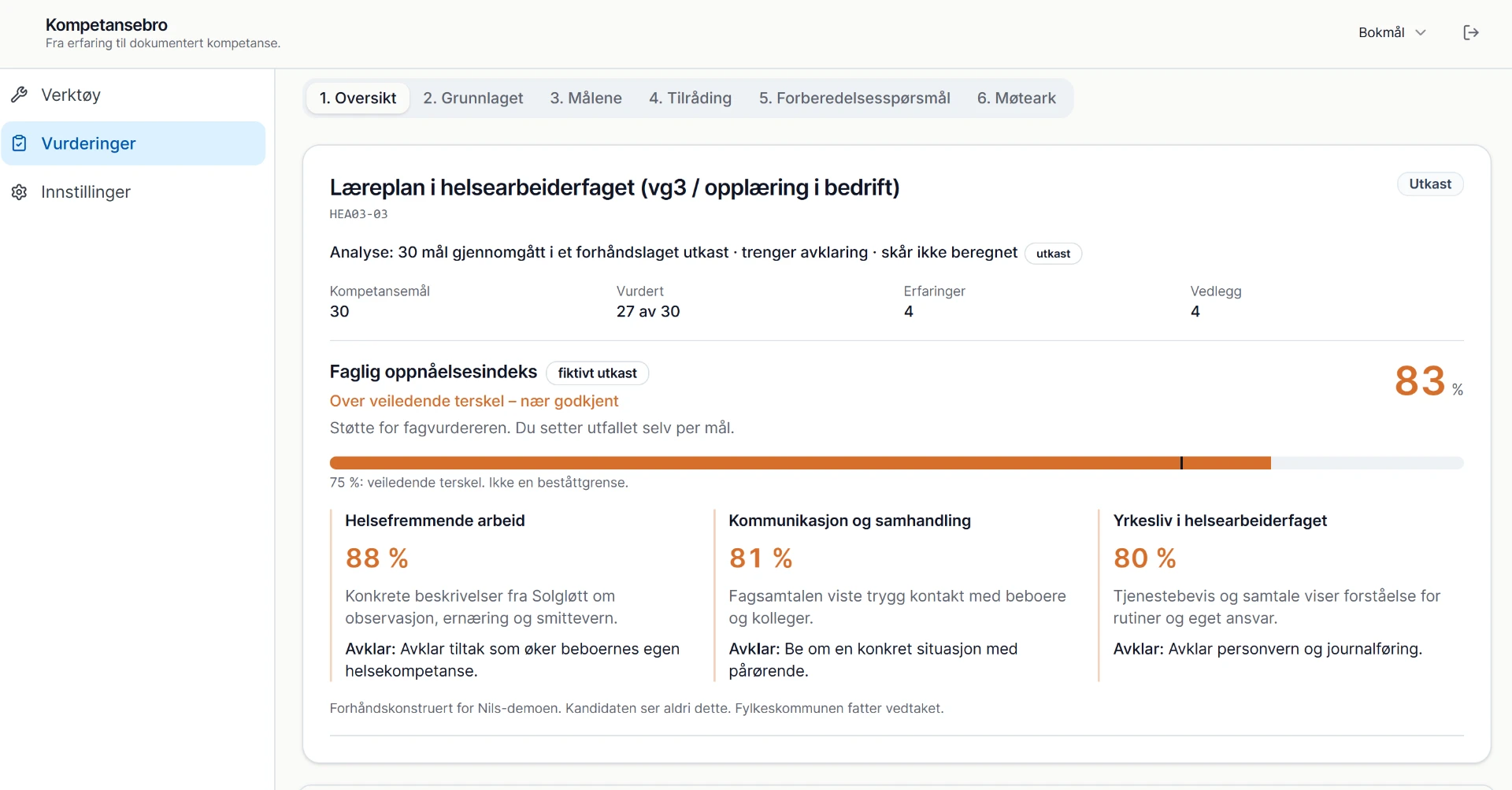
Synchrocity is responsible for developing the digital solution Kompetansebro, with MIRA as its central framework.
MIRA structures the relationship between practical tasks, the competence they require and a person's documented experience. The upper secondary VG3 curriculum is used as a basis for assessing prior learning for admission to vocational colleges. The project also aims to link this competence base to learning outcome descriptions in higher vocational programmes.
This should clarify what a candidate already masters, how their competence is documented and what may need supplementing. The solution supports professional assessment; it does not automatically approve competence or admission.
From conference presentation to piloting
The solution was presented at Fagskolekonferansen on 4 November 2026. The project has now reached the piloting phase. Healthcare is the first area of testing, with Fagskolen i Nord, Fagskolen Tirna and Fagskolen i Innlandet as the central institutions in piloting.
The pilot will gather experiences from applicants, caseworkers and subject specialists, examining practical use, documentation support and the clarity and traceability of assessments.
These experiences will inform further development of the solution and assessment procedures. Potential benefits will be evaluated during testing; they are not yet documented results.
A broad partnership
The project brings together education, working life, technology and student representation. All three vocational colleges are central to piloting.
- Fagskolen i Nord
- Project owner and one of the three central vocational colleges in piloting. Astrid Sebulonsen is project manager.
- Fagskolen Tirna
- One of the three central vocational colleges in piloting, contributing experience in recognition of prior learning.
- Fagskolen i Innlandet
- One of the three central vocational colleges in piloting, contributing experience that strengthens transferability.
- Synchrocity AS
- Responsible for system development and operation, with MIRA at the core of the solution.
- Kopano AS
- Contributes the competence database, source data, licences and associated training.
- Kompetanseforbundet
- Contributes a working-life perspective, social partner collaboration and regional anchoring.
- Sikt
- Provides advice on connections to the national admissions system.
- Organisasjonen for Norske Fagskolestudenter (ONF)
- Represents vocational college students and contributes the applicant perspective.
The Norwegian Directorate for Higher Education and Skills (HK-dir) has observer status on the project's steering group.
Regional testing – potential national relevance
The project starts with needs in Troms, but the challenges are relevant to other regions and educational institutions. Based on the pilot, the partners will assess expansion to additional subject areas and opportunities for broader scaling.
For Synchrocity, the project illustrates how MIRA can connect experience and documented competence to specific educational requirements – opening new opportunities for people.